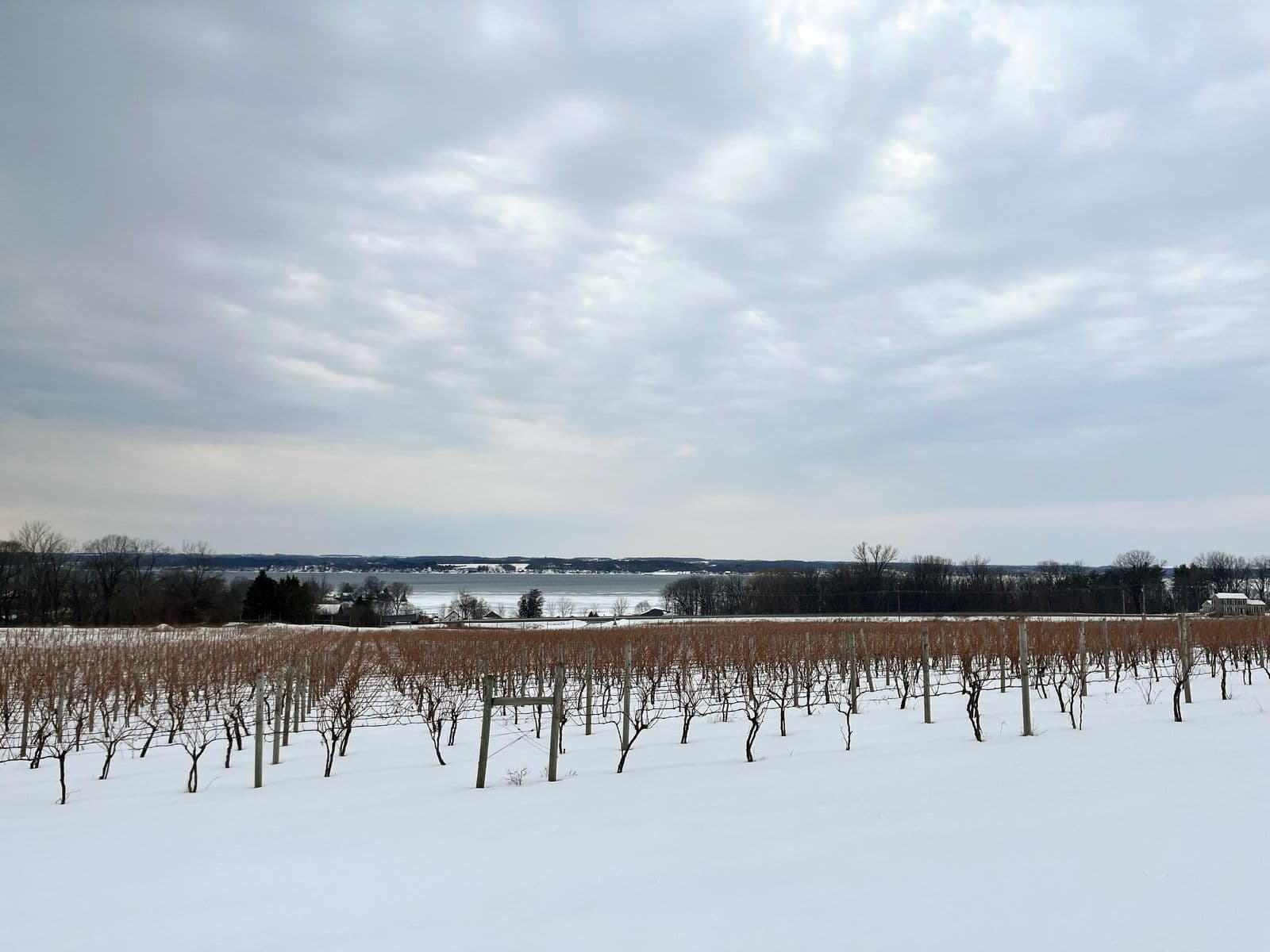
A major winter storm on January 25 dropped 6 inches of snow across the region, prompting 17 tasting rooms to announce temporary closures on social media. Two weeks later, a bitter cold snap shuttered seven more.
Average low temperatures in the FLX typically hover around 20°F this time of year, but sub-zero temperatures were recorded during the cold snap and wind chills dipped to -20°F in some areas.
January 25 Snow Event
Slower season softens the blow
For most wineries, the lost weekends stung less than they might have in peak season.
"While you never want to lose a day of business, this time of year is typically slow anyhow," said Shawn Kime, winemaker at Thirsty Owl on Cayuga Lake. He noted the storms didn't affect winemaking operations beyond routine plowing and shoveling.
“Hopefully some of those people who didn't come due to a storm will visit us on a nicer day and experience some great hospitality and personal attention” Kime said.
Still, the decision isn't simple. Atwater Vineyards closed January 25-26 for the storm, stayed open through the bitter cold on February 7, then closed again on February 8.
"Making the decision to close during winter weather requires a complex calculus that is based both on safety and finances," said George Nosis, owner of Atwater. "While we want to be open for our guests who make the trip to Atwater, we also want both customers and staff to remain safe. On the other hand, since winter is our slow season, every order counts."
"We have closed more days in January 2026 due to weather than any other month in recent memory," Nosis added. "We've also had frozen pipes in our tasting room and had to work harder at snow removal and heating our facility."
Several FLX tasting rooms will close seasonally during the winter months, there are 17 with hours currently set to Temporarily Closed on their Google Maps profiles.
February 7 Extreme Cold & Wind Chill
Peak dormancy, peak protection
Another concern with extreme cold is vine damage, but Chris Scholomiti, owner of CJS Vineyards told me the timing was fortunate.
Grapevines follow a U-shaped cold hardiness curve through winter, Scholomiti explained. They're most vulnerable in early winter and early spring as they acclimate and de-acclimate. By mid-February, they're at peak dormancy.
"If there's any time for it to be cold, now's the time," Scholomiti said. "We wouldn't want four below in December or in April." Kime echoed the assessment: "We haven't seen any extremely low temperatures that would damage vines."
Chris King, vineyard manager at Atwater, said the consistency of this winter's cold has actually helped.
"The vines and buds protect themselves more if conditions are progressively or consistently cold," King explained. "Conversely, if we have periodic or more consistent warm ups, the buds and vines will be a little less cold resistant. Big weather swings are much more damaging than steadiness."
King said Atwater typically doesn't worry about damage if temperatures stay above -5°F. "So far, the coldest it has gotten is -0.6°F, so we are in good shape."
CJS Vineyard uses straw to protect graft unions during the winter, and Thirsty Owl will lay some cold sensitive varieties down and cover with hay. Both winemakers told me the snow itself helps, providing an extra layer of insulation.
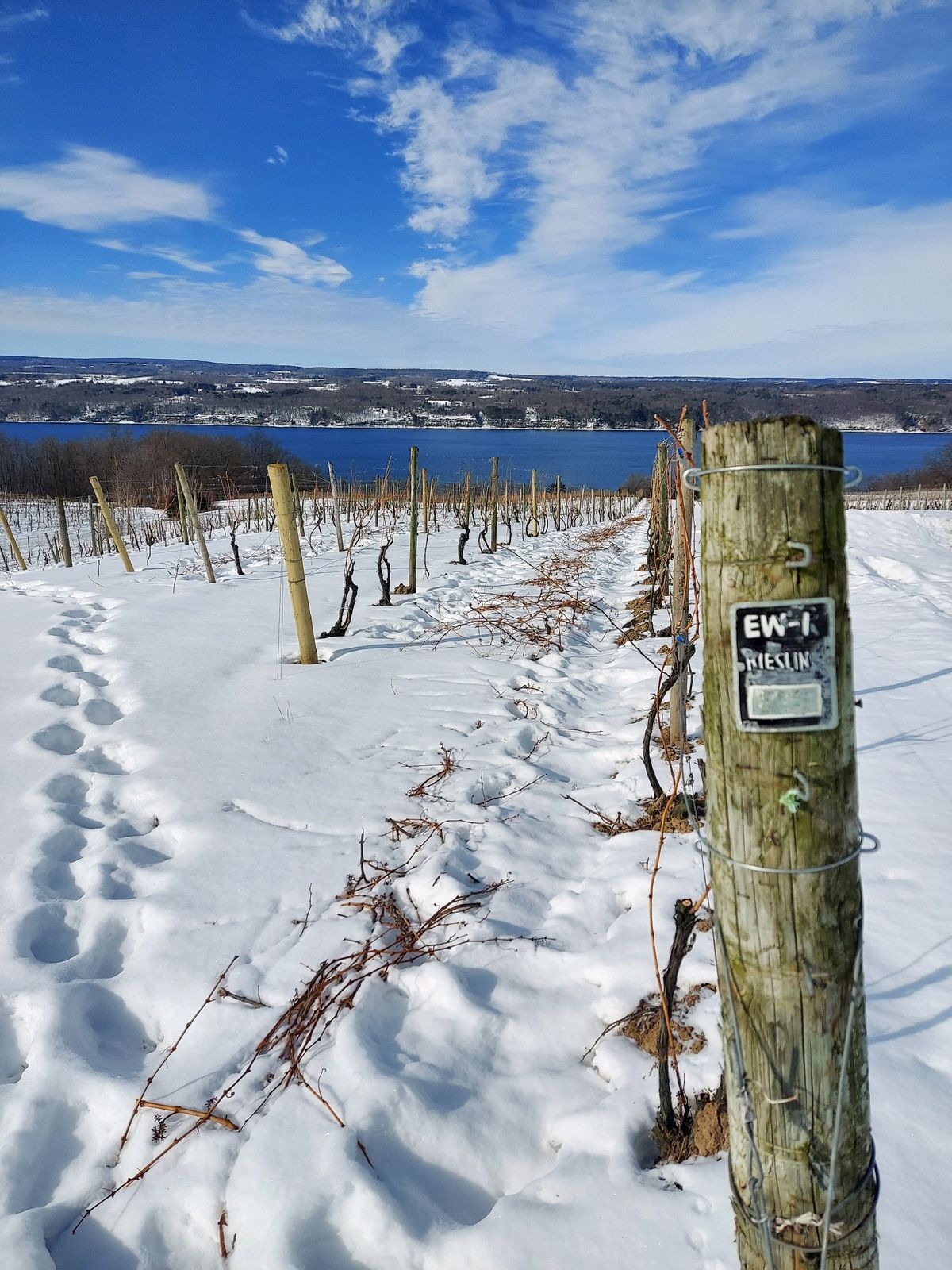 Atwater's Seneca Lake Vineyard - provided
Drought and uncertainty
A wild card is last summer's sporadic drought conditions, which stressed vines in parts of the FLX. At CJS, sandy soil on the upper slopes of a drumlin won't hold water, and Scholomiti lost leaves on some vines. He cut some grapes in August to conserve the plants' energy, sacrificing some of his harvest to preserve the vines.
"It remains to be seen what they're going to look like this spring," Scholomiti said.
At Atwater, winemaking slows in the December-February period, so the team hasn't been affected much yet. But bottling season is approaching, and if the cold persists, it could create challenges.