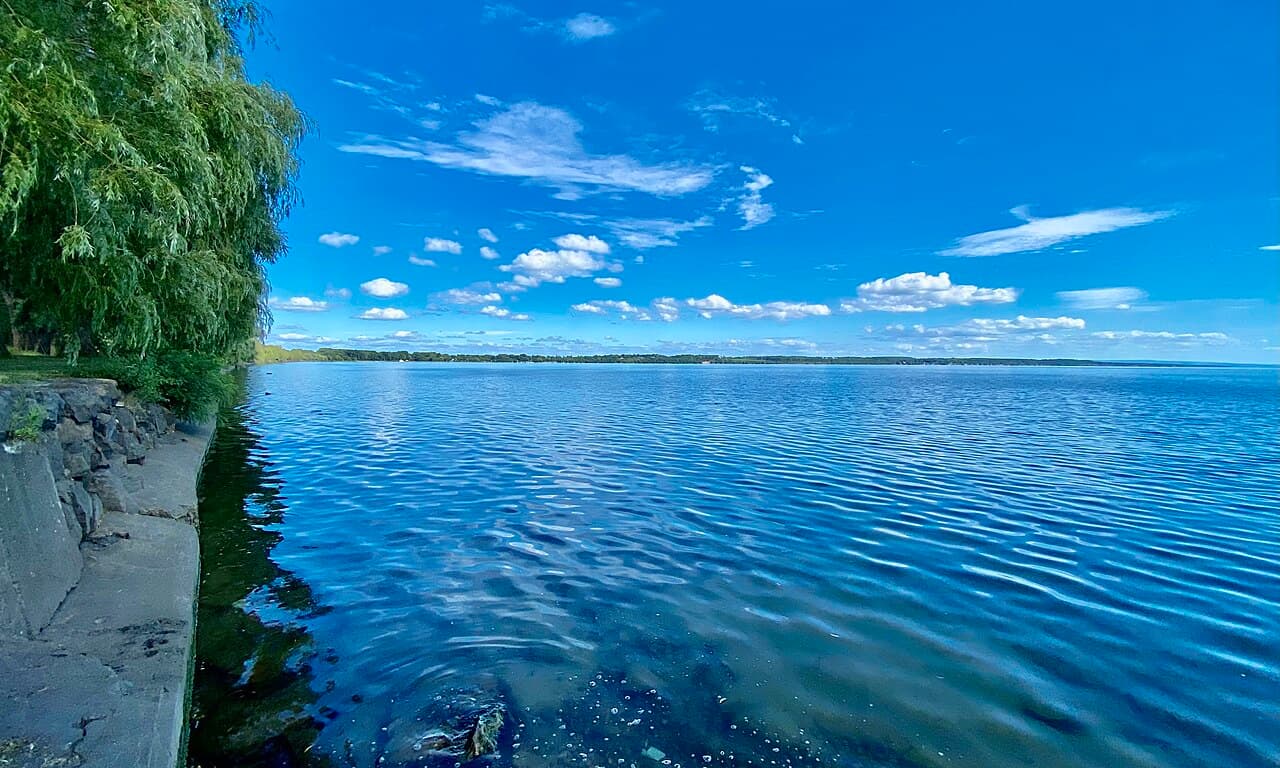
To everyone who attended this year's gathering at the southern end of Seneca Lake: I'm sorry. We waited, we listened, the drums were silent. Since that disappointing afternoon I've learned some things and I owe an explanation.
The Seneca Drums, Seneca Guns to some, have been mystifying folks like me for years. James Fenimore Cooper described them in 1850 as "a sound resembling the explosion of a heavy piece of artillery." Witnesses have recently told WENY News the booms are loud enough to shake houses near the shore.
Cooper, who learned about the phenomenon while visiting his son at Hobart College, wrote that "the lake seems to be speaking to the surrounding hills, which send back the echoes of its voice in accurate reply."
So what is it? Or, what was it?
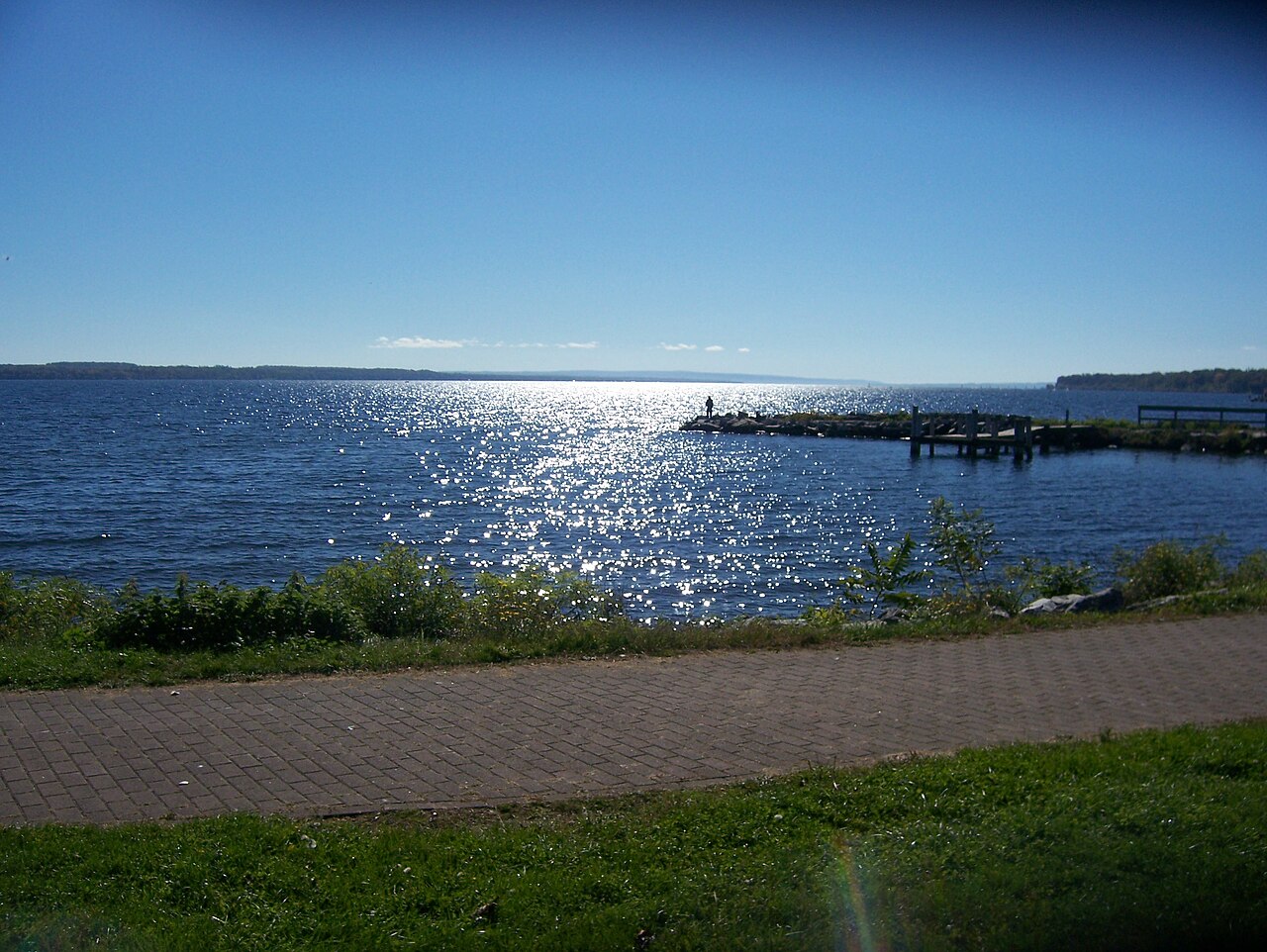 Photo: Wikimedia Commons / CC BY-SA 3.0
The answer came accidentally. Between 2018 and 2024, a team of researchers led by Art Cohn of the Lake Champlain Maritime Museum were on the lake, hunting for 19th-century canal boat shipwrecks. They found plenty—44 wrecks so far, some with coal still in their holds. But they also found something nobody expected: 144 massive craters pockmarking the southern lake bed, some as wide as 400 feet and 30 feet deep.
The lake floor, according to one researcher, looked like the lunar surface.
In 2025, Cornell University and SUNY ESF received a grant to investigate whether these pockmarks were connected to the drums. Dr. Jed Sparks, director of Cornell's Isotope Laboratory, and Dr. Tim Morin from SUNY ESF took a boat out in September and dropped sampling equipment 600 feet down into the craters, looking for methane.
They found it. The drums it turns out are lake burps.
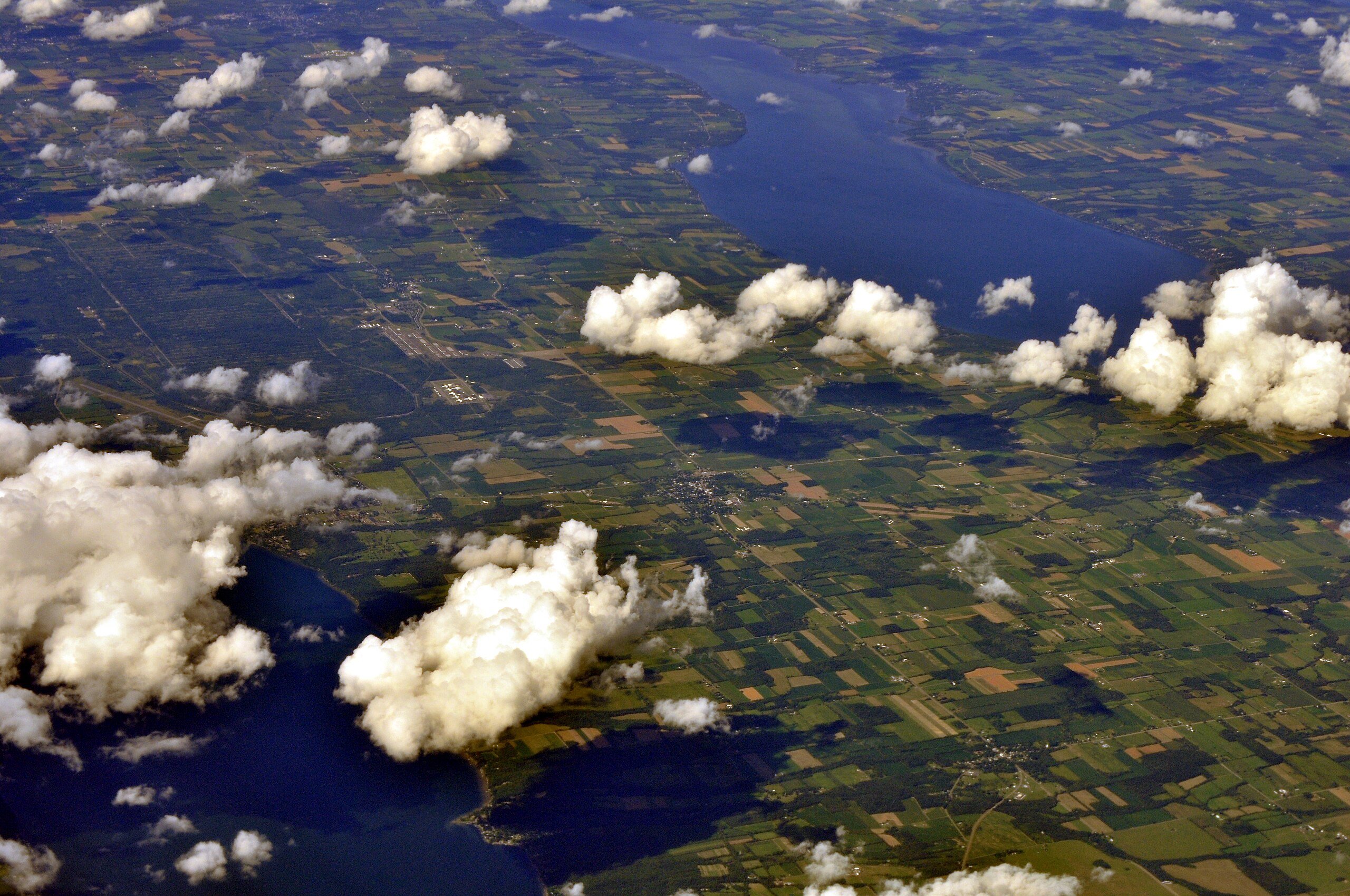 Photo: Wikimedia Commons / CC BY
Natural gas from ancient fossil deposits builds up pressure beneath the lake bed—for years, decades even. Eventually it bursts through the sediment. At 600 feet down the baby burp bubble is under enormous pressure. As it rises and the pressure decreases it expands. Birth of our big burp bubble becomes imminent. By the time it reaches the surface, it's grown to roughly 40 times its original volume. Burp.
The sound rolls across the lake and echoes off our low glacial valley for miles. Dr. Morin told the New York Times that the eruptions behave "like a big pimple." Not making it onto any tourism brochures, but he's not wrong.
Only one person that we know of has actually witnessed this in recent memory. Jim Mead captains a vineyard cruise boat on Seneca Lake. About 30 years ago, he was fishing when he saw a massive bubble rise from the water maybe 15 feet from his boat.
"It made a big boom," he said. "Curiously, there was very little splashing, but the noise was enormous." The mark of any good burp honestly.
Jim Mead heard the drums. We did not, and for that I apologize.
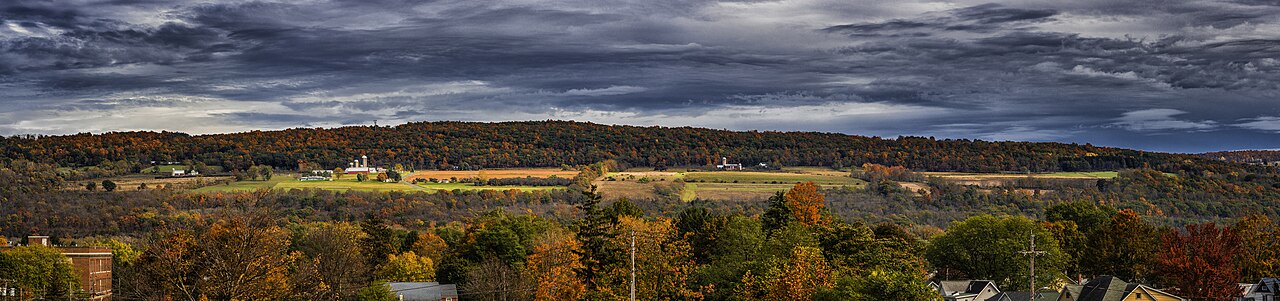 Photo: Wikimedia Commons / CC BY
The problem—and the reason I'm canceling next year's meetup—is that the drums have become genuinely rare. Carol Sisler, author of "Seneca Lake: Past, Present and Future," explains that after natural gas fields were developed in the region in the 1930s, the lake guns largely fell silent. The gas found other outlets. Salt mining operations beneath the lake, which have been running for over a century, may have helped too.
Dr. Sparks told the Cornell Chronicle he wants to place seismic listening equipment at the south end of the lake to figure out "how often and how big they are." Until that happens, nobody really knows the frequency. Many lifelong Seneca Lake residents have never heard a single boom.
Our little meetup wasn't just unlucky. It was statistically improbable.
 Photo: Wikimedia Commons / CC BY-SA
The same geological features causing the drums may also explain why Seneca Lake has mysteriously high chloride levels—higher than the other Finger Lakes. The lake sits above ancient salt deposits, and researchers are now testing whether briny water is seeping up through those same pockmarks along with the methane. May our lakes never become as salty as our potatoes.
"There's always been this weird extra source of chloride that nobody knows about," Sparks told the Chronicle. The Drums are connected to the lake's chemistry, to the drinking water supply for 100,000 people. The same forces that make the lake boom also make it salty.
Next year's Seneca Drums Meetup is canceled.
If you want to hear them, do what Jim Mead did: spend decades on the lake, live your life, and maybe one afternoon you'll get lucky. Maybe you'll catch a few trout. Cooper was right that "no satisfactory theory has ever been broached to explain these noises." Except now there is one. The lake is just uh... burping.
More Reading
- The Mystery of the Seneca Drums Persists — Cornell Chronicle
- Cornell, SUNY ESF to Investigate 'Seneca Drums' Mystery — Finger Lakes Times
- Researchers Take Samples from Seneca Lake — WENY News
- The Untold Origin Story of the Falls — NY State Parks Blog
- The Lake Gun — James Fenimore Cooper (1850)